Thursday, May 13, 2021

The "Topper" Movie's Customized Buick

From time to time I feature a car with a custom, non-production, body design.  Today's post deals with a 1936 Buick Century customized for the movie comedy "Topper."

Some background is here, including the following:

"[T]he Topper car was at the time the most famous movie car ever to hit the screen. It was initially designed on a 1936 Buick Series 60 chassis and then later underwent a Chrysler chassis and drivetrain update along with exterior styling changes. Topper’s roadster movie car was a combo of several cars built by Pasadena Coachbuilders Bohman & Schwartz to be featured specifically in the 'Topper' movie. The car was designed by Anthony Gerrity, then a well known designer who worked for Bohman & Schwartz.

Not surprisingly, the Topper car was just as popular as the 'always out for a good time' movie star ghosts. The roadster did include ... styling cues from Cord (exhausts) and also from the Graham (shark-like front end). Notable is that the car featured a second hidden steering wheel which allowed stuntmen to drive the car using a wheel hidden from sight. It worked for producer [Hal] Roach as many times scenes featured the Topper car 'with no visible driver.'"

Below are some images of the car at the time the movie was made.  It was later further customized, making the design cleaner, but far less noteworthy.  The car isn't beautiful, but has several interesting design features.

Gallery

Some Internet sites state that the man in this photo is Anthony Gerrity.

The Topper car predates the 1938 Buick Y-Job that also featured front fenders extending over the doors.  That design created hinging problems for production cars that took some effort by General Motors to resolve because hinges were to be on the A-pillar.  Here Gerrity used simple B-pillar hinging to allow the doors to include parts of the fenders when opening.

The tail fin is pure visual jazz.

Now for some outtakes from the movie.  The front strongly hints of the 1937 Cord 812 with its "coffin nose," horizontal grille bars extending along the sides of the hood, and the exposed exhaust pipes.

The rear wheel spats conforming to the wheel rim / hubcap ensemble is very 1930s.  Another period detail is the tiny taillight.

Front quarter view.  The least-futuristic features are the freestanding headlight assemblies.

Monday, May 10, 2021

Mid-1930s Hudson Redesigns

I wrote here about the many facelifts the 1936 Hudson body received before the line was finally redesigned for the 1948 model year.

Perhaps one reason for all that facelifting was that the 1936 bodies were of all-steel construction -- not wood structuring with steel cladding, less expensive because of less need for metal-shaping tooling.

That might explain why Hudson was able to market the redesigned 1934 line and then move on to the 1936 redesign with the '34 bodies in production for only two years.  This post presents Hudsons for the period 1933-1936, covering the three body designs produced during those four years.

Gallery

1933 Hudson publicity
The last pre-1934 redesign style.

1933 Hudson Standard Eight Sedan
Aside from the slightly slanted windshield and grille, and some modest body rounding, the design was not far removed from 1920s practice.

1934 Hudson Straight Eight Sedan
"Streamlining" was in the automobile styling air in 1934, the year the famous aerodynamic Chrysler Airflow appeared.  Redesigned Hudsons were pretty much in line with mainstream Detroit styling.

1934 Hudson Club Sedan
Features included skirted fenders and a distinctly sloping grille.  Hudson side windows were slightly larger than the norm for those times.

1934 Hudson Convertible Coupe
A distinctive feature was the numerous horizontal air exhaust panels on the sides of the hood.

1934 Hudson DeLuxe Eight Coupe
The coupe's top was more rounded than usual.

1935 Hudson Eight DeLuxe Sedan
The grille on this car puzzles me.  As can be seen below, '35 Hudson grilles featured strong vertical chrome bars, whereas the grille seen here is more of a mesh.  It's possible that this was a pre-production car photographed for publicity purposes before the 1935 grille design was finalized.  Or more likely, the image's Internet label was incorrect and this car is a Hudson Big Six, and not an Eight.

1935 Hudson Special Eight Touring Brougham
A Hudson with the production Eight grille.  Note the more conventional hood venting.

1935 Hudson Big Six Convertible Coupe
A fashionably dressed model in a top-down car on a winter day in Detroit.  I hope she was paid well.

1935 Hudson Custom Eight Brougham
Showing the Eight grille design more clearly.  This is a four-window style, comparatively rare for '35 Hudsons.

1936 Hudson Custom Six Sedan
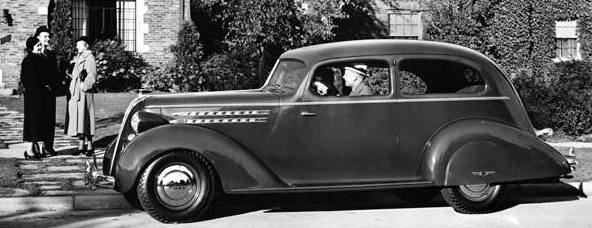
An example of the all-steel bodied redesigned 1936 models.  More rounded, and sporting an elaborate "fencer's mask" grille.

1936 Hudson Eight Coach
A two-door 1936 Hudson.

Thursday, May 6, 2021

Fourth-Generation Imperials by Chrysler

For decades, Chrysler marketed its high-end model named at one time or another as Chrysler Imperial or simply Imperial in those years when it was a separate brand.  Those various Imperials were never a sales threat to America's leading post- World War 2 luxury brands, Cadillac and Lincoln, aside from the 1957 model year when Imperial sales were around 36 thousand compared to Lincoln's 41 thousand.  Nevertheless, Imperials remained in production in one brand guise or another through the 1983 model year.

This post deals with what Wikepedia classes as Imperial's fourth generation, marketed model years 1969-1973.  That was the time when full-size Chrysler Corporation cars were given what was called "fuselage" styling -- more rounded than the somewhat more angular designs from competing firms.

Although Imperials were attractive, they were essentially facelifted Chrysler New Yorkers with more luxurious interiors.  Sales were never strong, beginning with about 22 thousand made in model year 1969 and ranging between 11,500 and 16,800 during the remaining four years.  For that reason, despite the high prices Imperials could command, the corporation did not invest a large amount of money on facelifts.

Images below are of cars for sale or are via Chrysler Corporation.

Gallery

1969 Chrysler New Yorker
The New Yorker was the top of the Chrysler brand's line.  The car shown here and the Imperials pictured below are all four-door hardtops for the sake of consistency.

1969 Imperial
Imperial exteriors were given a different grille and some other trim items.  A major difference is that Imperials had concealed headlights.

Rear quarter view.

1970 Imperial
The grille was redesigned.

As were the taillights.

1971 Imperial press release
Click on this image to greatly enlarge.  Another grille change and side trim added along with minor side panel alterations.

1972 Imperial
Once again, the grille-bumper ensemble is freshened.

Tail lights are now vertical and at the aft of the fender.

This shows the headlights when they were exposed.

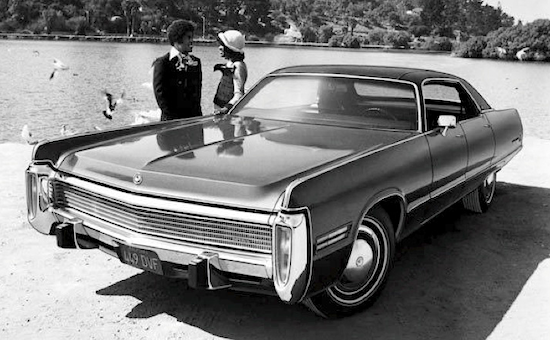
1973 Imperial
The grille mesh is new as are the rubber-tipped bumper guards.  The latter were in response to government collision impact regulations.

The rear seems essentially unchanged aside from the bumper guards.

Monday, May 3, 2021

1932 Packard Light Eight "Shovel Nose"


I am fond of most post-1929 Packards aside from the bloated 1948-1950 non-convertible models.  A 1932 Packard that interests me is the Light Eight, the company's first attempt at a less-luxurious, better-selling model inspired by the Great Depression's sales decline.  Its styling is noteworthy for its "shovel-nose" grille featured in the image above.  It's an excellent design, in my opinion.

Light Eights were only produced for what Packard approximated as a model year in those days.  Apparently Light Eights were too costly to build given their selling price.

A different view was expressed by one-time "Packard Cormorant" editor Richard M. Langworth in the book "Illustrated Packard Buyer's Guide."  He stated:

"Contrary to some observers, I believe the Light Eight succeeded in stemming the tide of economic misfortune.  It sold nearly 7,000 units, about 40 percent of Packard's total sales, at a time when the Eights were doing little better and the long-wheelbase Eights and new Twin Six were selling in the hundreds... And in 1933, when Packard dropped it, shifting its four bodies to the Eight at a $400 higher price, the company hit rock bottom, selling only 4,800 cars for the model year and turning desperately and urgently to the project that would result in the One Twenty."

Examples of the four Light Eight body types are shown below.

Gallery

1932 Packard Light Eight Sedan - Harwood Motors photos

Light Eight sedan bodies were typical of the time -- practical, but not very attractive.

Its inline-eight cylinder motor required a nice, long hood.  Also note the slightly sloped windshield, a hint at streamlining.

Rear quarter view: nondescript.

1932 Packard Light Eight Coupe Sedan - Riga Master photo
Only about 330 of these were made, the rarest Light Eight body type.


1932 Packard Light Eight Coupe - for sale photo
Coupe production was about 500.  It looks like a convertible coupe, but the top is fixed.

1932 Packard Light Eight Coupe-Roadster - Mecum auction photos
Coupe-Roadster production was around 1,060, but comparatively many seem to have survived, based on the number of images turned up in Google and Bing searches.

Front quarter view: a handsome car.

Showing the rumble seat.

Again, the nice, long hood.

Thursday, April 29, 2021

Nash in Transition: 1933-1935

Perhaps the most evolutionary period in automobile styling was the 1930s.  At the start of the decade, cars were boxy with functional elements such as headlights and fenders being distinct, separate elements.  By 1940, American cars had rounded bodies where formerly separate features were now largely integrated in the overall design.

One reason for this change was that by the mid-1920s cars were mechanically reliable to the point where appearance was becoming a more important sales factor.  For example, General Motors' styling department was established in 1927 and its design influence increased as years went by.  Then there was the Great Depression that resulted in a significant drop in sales numbers.  In desperation, car makers strived to make designs seem more "modern."

Today's post features the Nash brand, a mid-market American line that survived the Depression and became the instigator of American Motors Corporation.  I posted about "Nash Ambassador Sedan: Drastic Facelifts 1935-1940" here.  Here I deal Nash designs leading into that period.  For consistency, the top-of-the-line Ambassador model is featured, though 1935 images include the similar Advanced Eight due to a lack of available '35 Ambassador images on the Internet.  Unless noted, photos are of cars listed for sale.

Gallery

1933 Nash Ambassador
Nashes for 1933 were not largely different from 1920s design practice other than having more rounded shaping.

1933 Nash Ambassador
Rear quarter view of the same car.  The rounding is more apparent here.

1933 Nash Ambassador - owner's photo
1934s were facelifted '33s.  So use these 1933 images for comparison to the '34 photos below.

1934 Nash Ambassador
Various Internet sources state that the well-known stylist Alexis de Sakhnoffsky (1901-1964) either contributed to the 1934 Nash facelift or perhaps "influenced" the design.  The illustration in the ad card shown here is either his work or was created in the spirit of his rendering style.  Note how exaggerated the proportions of the car are.

1934 Nash Ambassador
Changes include a slightly sloped windshield, skirted fenders with sculpted detailing, a redesigned hood and grille, and a slightly reshaped trunk.

1934 Nash Ambassador - Hyman photo
Front quarter view.  A handsome car, but not as "modern" as 1934 LaSalles and Chrysler Airflows.

1934 Nash Ambassador
Same car, rear quarter.  The passenger compartment was carried over from 1933.

1935 Nash advertisement
The Nash line was redesigned for 1935, as this advertisement shows. The featured car appears to be Advanced Eight with a "beaver tail" rear.  Note especially the linear sculpted decorations on the fenders and body sides.  The red car at the bottom is an Ambassador Eight with its longer hood.

1935 Nash Advanced Eight - owner's photo
Or perhaps an Advanced Six.  Nash's design theme was called "Aeroform" for 1935.  It was indeed more streamlined than in 1934, but not in the same league as the Airflow.

1935 Nash Advanced Eight
Same car, showing the spatted rear fender and beaver tail.  The latter feature meant a small trunk, so larger, bulged trunks were added in 1936

1935 Nash Ambassador - unknown image source
Side view of what might be an Ambassador Six.