Showing posts with label Hotchkiss. Show all posts

Monday, September 22, 2025

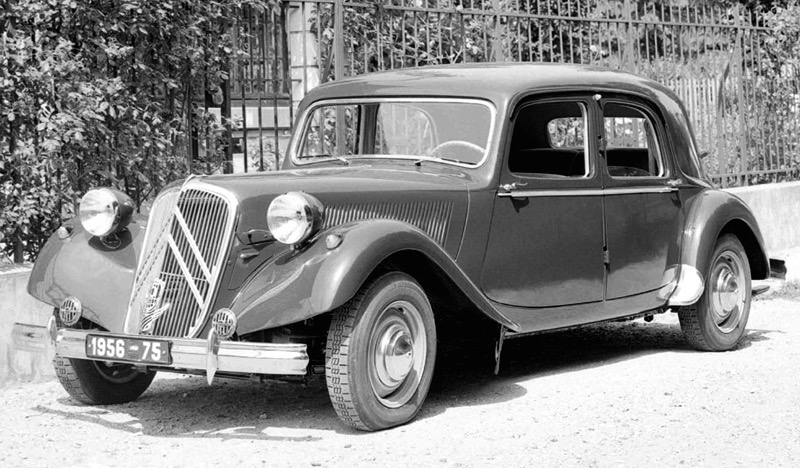
1939 Hotchkiss Cabourg Berline

Hotchkiss was a weapons-making firm that added automobiles to its product line in the early 1900s, as its Wikipedia entry mentions.  By the mid-1930s, its cars were solid entries in France's upper-middle to entry-luxury price/prestige hierarchy.  Plus, Hotchkiss was quite successful in the famous Monte Carlo Rallies.

Today's post deals with Hotchkiss' 6-cylinder 4-door berline (sedan), the model 686.  It appeared for the 1936 model year and continued in production until the early 1950s, with time out during World War 2.  Those berlines were marketed under the model name "Cabourg," a town on the Normandy coast located between Deauville and Caen.

It was succeeded by a car with a somewhat similar 1930s appearance that I discussed here in the post "Hotchkiss Anjou Walkaround".

Due to availability of Internet images, model year 1939 cars are feaured below.

Gallery

1939 Hotchkiss 686 Cabourg berline
As seen at the 1938 Salon de l'automobile, Paris.   Photo via Toutes les voitures françaises 1939 - p.52.  There is some camera lens distortion in the photo: note the front wheel.

1939 Hotchkiss 686 Cabourg berline - unknown photo source
A slightly better view of the Cabourg's left side.  The passenger compartment greenhouse side windows are not especially tall or rounded around the B-pillar, thereby avoiding the bloated appearance seen on a number of American cars of the mid-thirties.  Whereas the design is not exciting or even memorable, it's well-done and I class its appearance as pleasing.

1936 Hotchkiss 680 Cabourg berline - car-for sale photos
Early Cabourgs had front fenders that flowed over the wheel wells: standard practice for most early 1930s cars.

Rear quarter view.  The trunk hinges suggest that this might be an early production version.

c.1939 Hotchkiss 686 Cabourg berline - via Auto ancienne
Hotchkiss's 1937 facelift focused on fenders, reshaping them into the fashionable teardrop profile.

1939 Hotchkiss 686 Cabourg berline - car-for sale photos
Now for a mini-walkaround.

French car styling could often be quirky, but this design would have been at home in the U.S.A.

Hotchkiss grille design was improved in 1938 with the addition of the central, vertical divider.  The flat, one-piece windshield was out-of-date in 1939, two-segment, V'd windshields being the most common in America.

The dashboard also is old-fashioned by 1939 American standards.

Monday, April 10, 2023

Hotchkiss Anjou Walkaround

Thanks in part to French government policy (the infamous "Plan Pons") that discriminated against makers of low-production mid-to-upper scale cars, the Hotchkiss firm was nearing its last automobile-building legs when it introduced its Anjou model for 1950.  Production of Anjous ended in 1954 and Hotchkiss left the car business the following year.

Anjous were expensive, selling for around two million French francs.  That was about twice the price of a Ford Vedette or a Peugeot 203.  On the other hand, a Delage with a custom body would go for 2.3 to 2.8 million francs.  Little wonder that only 5,500 or so Anjous were made.

Anjou styling was conservative in the 1950 American context, but not for France.  But by 1954 it was becoming dated even by European standards.  The French Wikipedia entry (as of 22 November 2022) suggests that the coachbuilder firm Henri Chapron did some bodywork.  I wonder if Chapron had anything to do with the design, but have no reference regarding that.

All things considered, the Hotchkiss Anjou was an attractive car, though not really exciting to look at.

Walkaround images below are via the Artcurial auction site, with one exception.

Gallery

The 1930s-traditional Hotchkiss grille was retained.  Those crossed-cannons on the badge reflect Hotchkiss' history as an arms maker.

This view reveals the Anjou as being in line with contemporary Jaguar design practice.

This left-side view of a 1951 Anjou is from an unknown (to me) source.  Because Anjous had right-hand steering, a driver's natural approach would be to the right side, which most side views favored, including Artcurial, which didn't have a left side view.

The rear is rather bland, but that was the case for most 1950-vintage designs.


Front fenders extend over the front doors, a common 1940s American style.  That made for difficult hinging on the A-pillar, so the Anjou's front doors were the "suicide" type, hinged on B-pillars.


French luxury cars up to World War 2 often had right-side steering, and the postwar Anjou continued that odd feature.  In France, cars drove on the right side of roads, so left-side steering was safer, more practical.  The Anjou dashboard seems Spartan, even for 1950.

Monday, March 9, 2020

1930s French Drooping Beltlines

Once upon a time, say 50 or more years ago, the automobile industry was much less international than now.  Car manufacturing countries often had tariffs to protect domestic firms and each country had its own currency and exchange rates relative to others.  And there might have been cultural factors that led to cars having distinctive national visual tendencies.  American cars looked American, English cars English, and so on.

One distinctive design quirk for many French cars from 1934 to the early 1950s was beltines (that run along the lower edges of side windows) that drooped or fell off downwards towards cars' aft ends.

Most French brands did not have this characteristic.  But the country's "big three" car makers -- Citroën, Renault and Peugeot -- had models with just that touch.  So many French cars' beltlines drooped.

Most of the images below are factory sourced or are of cars for sale.

Gallery

1934 Citroën 7 A
A very early Citroën Traction Avant.  This popular car and its larger 11 CV sibling were the first mass-produced French cars with the lazy beltline, as best I can tell.

1954 Citroën 11 B Familiale, auction photo
Six-window cars were longer and made the effect more noticeable.  One thing I do not know is why it appeared in the first place.

1936 Peugeot 402 Longues
Once Citroën launched the style, it was adopted by its main competitors, as can be seen on this six-window Peugeot.

1937 Renault Viva Grand Sport
And on this Renault.

1937 Delage Berline
A few other brands fell in with the dropping beltline fashion, including some exclusive Delage models such as this one.

1939 Hotchkiss Modane Coupé, Bonhams photo
The French seem to prefer four-door cars.  But this two-door Hotchkiss, low-production that it was, also followed the fashion in a stubby way.

Thursday, May 17, 2018

Hotchkiss Grégoire Cars Seen in Florida

Only about 247 front-wheel drive Hotchkiss Grégoire automobiles were built in the early 1950s by the usually conservative Hotchkiss firm, a maker of weapons as well as cars.

Following World War 2, French politicians effectively killed the upper-middle range and luxury segments of the country's automobile industry.  Skilled craftsmen working at coachbuilding firms along with assembly line workers lost their jobs thanks to the compassionate social theories rattling around France in those days.

Hotchkiss, in what amounted to a last-ditch effort to stay in the automobile business, hired noted engineer and front-wheel drive proponent Jean-Albert Grégoire to create a different kind of Hotchkiss.  The project failed, as is described here.

If you live in North America and want to view two of these rare cars, a place to visit is the fascinating Tampa Bay Automobile Museum that features front-wheel drive and rear-engine cars, mostly from Europe.

Below are some photos I took there in 2017 along with some other Hotchkiss Grégoire images.

Gallery

An early (Spring 1950) version of the Hotchkiss Grégoire.  It is a six-window sedan, but production cars had only four windows.  At the right are MM.  de Gary and Grégoire.

A publicity photo of the same car.

A 1951 Hotchkiss Grégoire.  I do not know the setting or the source of this photo.  Like most recent front-wheel drive cars, it has considerable front overhang.  The windshield is raked at an angle typical of today's cars, but unusual in the early '50s.

Here is the Hotchkiss Grégoire sedan at the Tampa Bay museum (Web site description here).  Cars are tightly packed at the museum, so it was difficult to get decent photos.  I had to use a wide-angle setting.


Two views of its rear design.  By 1950 American standards, the styling is obsolescent, looking more like a U.S. 1942 model.  Nevertheless, the design is pleasing, though not outstanding.

This is the museum's Web image of its Hotchkiss Grégoire Coupe, one of seven built.  The body is by Henri Chapron (indicated in the amber patch by the radio antenna).  More about this car can be found here.

For some reason many cars had raised hoods and award ribbons, making documentary photography impossible from certain angles.

Rear 3/4 view.  The three-segment wraparound backlight is taken from 1950-vintage U.S. hardtop convertible styling.  The C-pillar seems too narrow, and the unusual combination of the back window design with a fastback body shape isn't successful either.  I credit Chapron for making an interesting try.

Monday, May 2, 2016

Styling Variety: 1930s French Cars

During the 1930s General Motors' styling boss Harley Earl would travel to Paris to visit the annual Salon de l'Automobile.  It was a serious focus to what might seem to some a frivolous enjoy-Paris corporate junket.  That was  because fashion-conscious France was a hotbed of car styling ideas that Earl wanted and needed to be aware of.

And there were many automobile makers in France, even in the depth of the Great Depression.  For example, the mid-decade 1935 Paris salon had 27 firms exhibiting passenger cars.  Those 27 firms produced only about 170,000 cars that year, and 3/4 of those were from the "big three" -- Renault, Citroën, and Peugeot.  The remaining manufacturers averaged about 1,550 cars that year, which makes me wonder how they could afford to keep body designs even halfway fashionable.  The largest firm, Renault, produced around 58,000 cars that year, yet marketed ten lines of cars using what seems to be three basic bodies -- which also seems like a small basis for product renewal.

Regardless, French car styling from the 1930s was innovative and varied.  Admittedly, this was especially the so for custom-built bodies, but also was the case for factory models.  The images below are mostly of standard production cars.

Gallery

Bucciali Double-Huit - body by Saoutchik - Paris Salon 1931
This car was intended to astonish, something it still does 85 years later.  It has a underslung chassis, so it sits low.  The low stance is further emphasized by the large wheels and extremely long hood.  Not to mention the low-headroom passenger compartment.

Voisin C 20 - Paris Salon 1931
Many of Gabriel Voisin's designs also astonish.  His C 20 and C 22 models feature radically disaggregated components.

Voisin Aérodyne - Paris Salon 1934
This is a pre-production car, but essentially the same as the few that were built.  Here Voisin edges towards aerodynamic shaping on his way to the 1936 Aérosport.

Citroën Traction Avant - 1956
The Traction Avant line was introduced for 1934, and its design was virtually unchanged even by 1956, the year before it was replaced.  The body is low because it lacks a driveshaft and also a chassis, being of semi-unitized construction.  One French styling fashion in the late 30s was the belt line drooping towards the rear, as can be seen here.

1935 Renault Nervastella Grand Sport
Unlike the Citroën, this top-of-the-line Renault is tall.  And it also has a somewhat streamlined appearance that's negated by the formidable grille-hood combination.  Note especially the the highly-sloped, V'd windshield: advanced for 1935.

Peugeot 402 - ca. 1939
The 402 first appeared for the 1936 model year and, like the Renault above, featured a streamlined look.  The body aft of the cowling seems inspired by the 1934 Chrysler Airflow.  For me, the most intriguing feature is the headlamps buried behind the grille.

1937 Hotchkiss 686 Coupé Modane
By the mid-1930s Hotchkiss' were solid looking cars.  Attractive, slightly conservative styling for its bourgeoise clientele.  I am especially fond of the grille design that relates well to the fenders.

1937 Panhard Dynamic
The ancient firm Panhard et Lavassor developed styling senility in the early 30s with its Panoramique three-piece windshield design that progressed to the strange Dynamic model shown here with its central driving position.  "Creativity" does not necessarily produce good results.

Talbot-Lago T 155 SS by Figoni & Falaschi - ca. 1938
Finally a fabulous "Goute d'eau" (teardrop) Talbot-Lago custom that's marred by having spats over the front wheels.  Most similar Talbots had exposed front wheels.