Showing posts with label Ruxton. Show all posts

Thursday, March 25, 2021

Gardner -- Towards the End

Gardner (Wikipedia entry here) was a moderately successful 1920s American brand that became unprofitable by 1927 and ceased production in the 1931 model year.   The company was based in St. Louis, far from Detroit, and seems to have been an "assembled" car using mostly parts acquired from various suppliers.

The present post deals with some 1927 through 1930 model year cars that were attractive for their time.  But body designs probably did not benefit much or at all from professional stylists, a category that in those days was involved with custom body building and at General Motors' new styling group.

A surprise awaits at the end of the Gallery section below.

Gallery

A 1927 Gardner sedan.  A trim design typical of the times with a trunk to help balance it visually.

Roadster from 1927.  Most Gardners seem to have had two-tone paint schemes.  This one is simple, but elaborations appeared the following year.

Another roadster, probably a 1928 model photographed in San Francisco by a newspaper photographer.

Another 1928 Gardiner Model 75 Roadster.  This image is from a publication, possibly Automobile Quarterly.  The small, rectangular panel on the door has the main body color here, but was of the second tone in the the case of the image above.

Catalog side view of a 1928 Model 85 Sport Roadster.  Its two-tone scheme is more elaborate than on Model 75s.

Bob Gardner photo of his 1928 Model 85 Sport Roadster.

Factory image of a 1929 Model 130 four-door sedan.  Attractive for its time.

Clip from the February 1930 MoToR magazine showing a front-wheel drive Gardner displayed at the New York Auto Show.

Catalog side view of the front-wheel drive Gardiner.  I did not know that Gardner built front-wheel drive cars, but a few prototypes existed.  This was because Gardner was involved with the Ruxton project, and the body and running gear were that of the latter brand.  The hood, grille, headlights, fender-running boards and some trim differed.  Compare to the image below.

1930-vintage front-wheel drive Ruxton four-door sedan, Barrett-Jackson auction photo.  Ruxtons seem to have had longer wheelbases.

Thursday, March 4, 2021

Colorful Ruxton Sedans

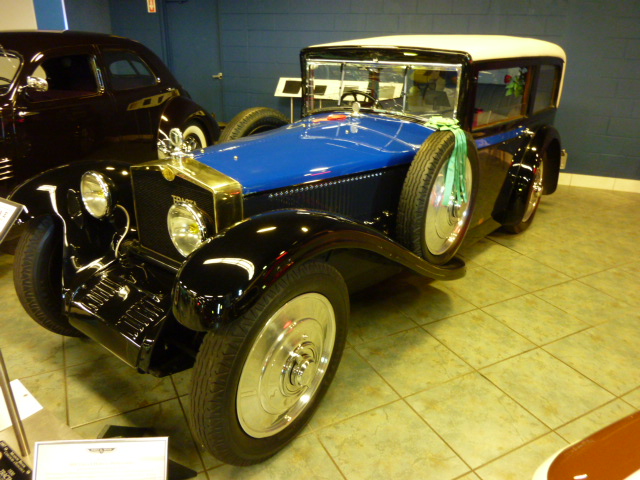
Ruxton was a short-lived (1929-1930), low-production American brand -- brief Wikipedia entry here.  Ruxtons were unusual, having front wheel drive, and therefore were much lower than most contemporary cars.  Other noteworthy features were the slitlike WoodLite headlamps and the lack of running boards (justified by their low height).  And some were given bold, unusual paint schemes, the subject of this post.

Ruxton bodies were designed by engineer Joseph Ledwinka. Those paint schemes were devised by master designer Joseph Urban.

There is little information regarding Ruxton on the Internet if a quick Google search is any guide.  Amazon is selling a book about Ruxton for more than $800 -- far above my reference library price-point.  For those reasons, some of the photo captions below are conjectural.

Gallery

Blackhawk Museum Ruxton photographed in 2010 and 2013 by me.

This mentions that multicolor Ruxtons either had this blue-violet scheme or one based on brown-orange.

Another view.  Lighting conditions at Blackhawk make for difficult photography.

Bonhams photo of perhaps the Blackhawk Ruxton or another with the same paint scheme.

Rear quarter view.

Tampa Bay Automobile Museum's Ruxton, my photos. This is the alternative color scheme mentioned above.

Rear quarter view.  Again, interior lighting made it difficult to capture colors accurately.

Nethercutt Collection Ruxton.  It's possible that the Blackhawk information card was incorrect and this color scheme is original.

Driehaus Collection's Ruxton.  The same caveat applies here as well.

A less elaborate scheme, photo via Bonham's auctions.

Period photo showing what seems to be a two-tone pattern with white or cream accents around the side window.

Monday, October 19, 2015

Tracta: Obscure, but Noteworthy

At the end of the 1920s, most cars tended to be tall.  In part this was because they had high clearance necessary for negotiating unimproved country roads that often consisted of paths worn down by tires separated by a higher, grassy center strip.  Main bodies were tall because drivers and passengers normally expected to be seated chair-high, wearing hats.  Another reason for tall cars was the driveshaft running below the passenger compartment between the front-mounted motor and the rear axle and differential.

Front-wheel-drive eliminated the driveshaft.  With that factor removed, height could be reduced a little.  But what if a car didn't have to be able to drive on unimproved roads?  By the late 20s in much of America and western Europe, most roads between towns (if not between villages) were graded and paved in some manner.  So clearance could be reduced for luxury or semi-luxury cars that were unlikely to ever be driven on poor roads.  And perhaps seat height and overhead space for hats might be shortened a bit too.

The result was a number of low-slung, sporty cars appearing around 1930, none of which was very successful in the Great Depression market.  Sales success came later via the traction-avant Citroën.

An early front-wheel-drive car from France was the Tracta (1926-1934), few of which were built.  Tractas are perhaps best-known today (and the brand remains obscure) because the company was led by Jean-Albert Grégoire (1899-1992), legendary engineer of innovative automobiles.

Tracta in some respects was a racing car company that also built some passenger cars.  Those passenger cars were low and sporty, though their styling was in the same vein as some contemporary American front-wheel-drive brands.

Gallery

Two photos of a 1930 Tracta Type E that I took a few years ago at the fascinating Tampa Bay Automobile Museum which also has a 1929 Tracta Type A in its collection.
The following two images show contemporary American front-wheel-drive sedans.

In the foreground is a low-height, running board - free 1929 Ruxton.  This photo offers a comparison to a standard American sedan, likely a 1928 Cadillac.

A 1929 Cord L29.  Also low to the ground, but it retains running boards that were standard practice in those days.

This image was taken from the publication Touts les voitures françaises 1982 that contains a section dealing with 1932 French cars.  These sporty Tractas are low, but include running boards.  Click to enlarge.

Thursday, November 28, 2013

Gem of an Automobile Museum

A version of his article was originally posted on the Art Contrarian blog 11 May 2012.  I am re-posting it because I believe it will be of interest to readers here.

Automobile museums are all different, yet in many ways similar -- especially the Important Museums.   By that I mean car museums with large collections here in America seem obliged at have at least one Duesenberg, one Cord, a Ford Model T, an early 1900s antique of some description, a Packard from any era plus at least one car from the 1930s with either a V-12 or V-16 motor.

So it was with surprise and pleasure that I recently visited the Tampa Bay Automobile Museum, a gem filled with cars seldom seen here in the United States.   Moreover, the collection is built around a theme, whereas most car museums strike me as being filled with whatever nice-to-have vehicles that pop up on the market, creating a sort of random effect.  But the Tampa Bay museum's collection core is built around two poles.  One is cars with engines in the rear, the other is cars with front-wheel drive.  And those cars had to be from the era 1920-1950.  Because most cars with those characteristics were built in Europe in those days, I saw many cars that I've never encountered in person before.  (Sadly, I've visited few European Automobile museums; one does have to make travel compromises with one's spouse, after all.)

Let's take a look at some photos from my visit:

Gallery

Ruxton - 1929
Ruxton was an American front-wheel-drive car that reached the market when the Great Depression hit; only a few hundred were made.  The four-tone paint scheme was designed by Joseph Urban who also created a similar scheme based on blue.

Tracta E - 1930
Another low-production fwd car, this by Jean-Albert Gregoire (1898-1992) of France, father of numerous automobile engineering innovations.  I confess not to have heard of the brand before.

Aero - 1937
Another brand previously unknown to me. This fwd car was built in Czechoslovakia.

Tatra T87 - c.1942
The Czech Tatra firm built several series of rear-engined cars from the mid 1930 to the late 1970s. The one shown here is to me the archetypical version.

Tatra T97 - 1938
Tatra Tatraplan - late 1940s

Voisin C7 - 1927
The power train layout is the traditional front-motor-rear-drive. I include it because it's a Voisin and its body is constructed of wood and doped fabric of the Weymann type.

Panhard Dynamic - 1938
Some (many?) French cars are rather ugly, and this Panhard is near the top of the list.  The drive train is conventional.   But note the covered wheels and three-piece wraparound windshield.   And if you look closely, you'll find that the steering wheel is mounted at the middle of the dashboard -- neither right nor left.   In the 1930s, luxury French cars had right-hand steering while mass-market cars mounted the steering wheel on the left.   Traffic in France followed the German and American pattern, so expensive French cars were better suited for driving in Britain or Czechoslovakia.   Apparently Panhard wanted to split the difference.