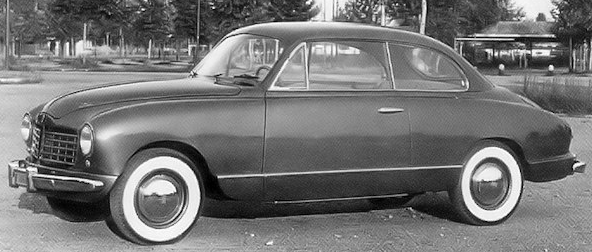
Showing posts with label Fiat. Show all posts

Monday, October 13, 2025

Count Mario Revelli di Beaumont: Independent Stylist

When researching this post dealing with the 1937 Alfa Romeo 6C 2300B Berlinetta by Pinin Farina, I discovered that the car's stylist was a member of Italy's nobility -- Conte Mario Revelli di Beaumont, and not Pinin Farina himself.  In that post I noted:

"According to the carrozzieri-italiani.com web site, the stylist was Conte Mario Revelli di Beaumont, an independent designer who produced designs for a variety of coachbuilding firms.  Background on Ravelli in English is here.  His Italian language Wikipedia entry is here, and his entry in French is here, noting that in the second half of the 1930s he worked with Pinin Farina and Bertone."

He was highly competent, working for major Italian coachbuilding firms (though apparently not Touring) as a freelance designer.  I haven't found why he seemingly never was exclusively employed by a single Italian firm.  (Though postwar, he spent some time at General Motors.)  Perhaps, due to his ancestry and status, he already had sufficient outside sources of income to offset inactive periods between design gigs.

As for me, I'm a bit embarrassed that I wasn't aware of him, though I must have passed over his name when researching various designs.  Because now, researching him, I find all sorts of mentions of him on the internet.  C'est la vie, I suppose.

By the way, another useful reference on Mario Revelli (1907-1985) is "Mario Revelli: The Most Prolific Car Designer You’ve Never Heard Of" here.

Below are some 1934-1950 designs with which Revelli is associated.

Gallery

1934 Lancia Augusta Coupe Aerodinamica by Stabilimenti Farina - photo via Lopresto Collection

1938 Fiat 1500 Berlinetta Aerodinamica by Ghia
Headlight assembles seem similar to those on the "Sharknose" 1938 Graham.  The grille design also has an American feeling.

1941 Fiat 1500C Coupe by Bertone, completed c.1945 - photo via Museo Nicolis

1936 Lancia Astura III Tipo Bocca Cabriolet by Pinin Farina- RM Sotheby's photo
One of Revelli's most outstanding designs.

1942 Alfa Romeo 6C 2500 SS by Bertone - photo via Montesquieu-Volvestre
Variant of the Fiat 1500 above, but completed earlier.

1950 Simca Huit-Sport Cabriolet by Stabilimenti Farina - photo via carrozzieri-italiani.com
Revelli had no trouble adjusting to postwar styling trends.

1937 Alfa Romeo 6C 2300B Pescara Berlinetta by Pinin Farina - unidentified auction photo
Subject car of the post mentioned above.

1938 Fiat 1500 Berlina - RM Sotheby's photo
Unlike some of the cars pictured here, the Fiat 1500, launched in 1935, was produced in large numbers.   Note the aerodynamic features that were nearly contemporaneous with those of the ill-fated (in terms of sales ) 1934-37 Chrysler Airflow.  Revelli had a strong interest in Aerodynamics.

Thursday, October 2, 2025

Original Fiat 8V Berlinetta: A Photo Set

In 2013, I posted about Fiat's 8V (its Wikipedia entry is here).  A dozen years later, more images are available, so now might be a good time to pass them along.

The 8V's engineering was under the direction of Dante Giacosa, original styling was by Luigi Rapi.  Only 114 8Vs were made over the period 1952-1954.  Wikipedia notes: "34 of the cars had a factory produced bodywork by Fiat's Dipartimento Carrozzerie Derivate e Speciali ('Special Bodies Department')."  Their styling was via Rapi.  Others were by coachbuilding firms.   For example, I posted "Ghia's Fiat 8V Supersonic" here.

The images below of initial 8V styling seem to be originally via Fiat.

Gallery

A rare, early color photo.

Side view.

And what's inside.

Seems to be from the same photo shoot as the initial image.

More early color.

Looks like the car is in motion -- until you notice the wheel spokes.

Rear view of the same car.

Overhead view shows some results of wind tunnel body-shape testing. 

Monday, September 1, 2025

A Tale of Two Fiat 1400 Cabriolets by Vignale

Fiat's first postwar model, the upscale (for Fiat) 1400 model was introduced in 1950 and became the subject of many carrozzeria-designed bodies over its production run ending in 1958.

Today's post features two early such cars built by Carrozzeria Vignale (Wikipedia entry here).  Their designs are not particularly good.  I'm posting about them because, although the 1947-1959 Italian design era is considered an aesthetic highpoint, it's worthwhile seeing some examples of inferior designs from those days.

Fiat 1400s received unit bodies, as opposed to the then-common body-on-frame construction.   Unit bodies are more difficult to customize due to the need to alter or eliminate body structure components.

That said, it seems that Fiat built cabriolet (convertible) versions of the 1400.  Unfortunately for our purposes here, I can only assume (not prove) that the firm created a special quasi-unit structure for such cars.  That allowed coachbuilders to create designs for cabriolets and related pillarless "hardtop"bodies and coupés.

The designs presented below are similar, major differences being front ends, side trim and two-tone paint schemes.  I have no information regarding who designed the 1950 car.  The 1951 version is credited to the astonishingly productive Giovanni Michelloti.  It's not one of his better efforts.

Gallery

1950 Fiat 1400 Cabriolet by Vignale - car-for-sale photos
The side trim / two-tone paint scheme is the same as that found on some Fiat 1400 sedans of 1957.  It's possible that the '57 scheme was based on this 1950 car.  But it's more likely that this scheme was applied to the this car in 1957 or thereabouts to freshen it up.

1950 Hudson Commodore Eight - car-for-sale photo
Note the similarity of the Fiat's grille to that of this 1950 Hudson.

1951 Fiat 1400 Cabriolet by Vignale, Giovanni Michelotti designer - photos via Rapley Classic Cars
No Hudson grille here ... but it also looks somewhat familiar.

1951 LeSabre concept car mockup - photo via General Motors
What looks like a jet engine intake is actually a unit that rotates to reveal two closely-spaced headlights.  The functional grille is below it.  The LeSabre was later modified in the form of air intakes in the blank areas flanking the main grille.

1950 ca. Fiat 1400 Cabriolet - factory photo
Here is a factory-built cabriolet.

The Vignale version shares the door and the passenger compartment.  The area forward of the door seems slightly longer, and rear overhang has definitely increased.

 
Michelotti's version's aft fender profile is subtly altered.  The two-tone scheme with its more shapely upper profile and added zone on the rocker panel makes the car seem less slab-sided.

Rear quarter view.

As mentioned, rear fender profiles are slightly adjusted (they lean forwards a little).  Trunk lids are the same.

Thursday, October 10, 2024

More on Fiat 124 Sport Models

Both of today's featured cars are Fiat 124s of the same generation.  Both are sporty.  But they were designed by different men and their bodies were built by separate firms.  The convertible Sport Spider (pronounced "speeder" in Italy) was designed by Tom Tjaarda and built by Pininfarina.  The Sport Coupé was designed by Felice Mario Boano at Centro Stile Fiat, bodies were built by Fiat.  Both initial versions can be considered 1967 model year cars.

I previous wrote about these sporty Fiats here.  Background on the Spider is here, and for the Coupé here.  In my post I mentioned that I was (finally!!) in the market for a sports car in 1971 and test-drove a 124 Sport Coupé.  I liked the styling of the Sport Spider much better, but its price was a bit higher than I wanted to spend.  As for the Sport Coupé, I hated the driving position -- steering wheel too far from me and the floor pedals too near for comfort.  So I bought an entry-level Porsche 914 -- having a removable solid top more appropriate for Upstate New York driving than the Sport Coupé's ragtop's would have been.

The main non-styling structural difference between the two models was their wheelbases.  The Sport Spider's was 89.75 inches (2280 mm) and that of the Coupé was 95.3 inches (2420 mm) -- fairly significant.  The additional length was needed because the Coupé featured a small bench seat behind the driver's seat, something lacking in the Spider.  Of course, that and the fixed top affected the package Boano had to deal with.

In the Gallery below a Spider and a Coupé are compared.  The blue car is a 1971 Fiat 124 Sport Spider, the red car is a 1969 Fiat 124 Sport Coupé.  All photos are from Bring a Trailer Auctions.

Gallery

Headlight assemblies are slightly sunken, and the grille opening is sculpted to conform the that feature.  Overall, an appropriate composition.

An even simpler front end, though the turn indicator lights are somewhat arbitrarily wedged in.

This shows the headlight assembly area more clearly.  Subtly flowing fenderline.

The windshield appears to be carried over from the Fiat 124 sedan, though it is raked more steeply.


Wheel openings are similar.  The extra length of the Coupé is hard to establish given the two differently shaped bodies.  But note the Coupé's rear seatback lies above the car's axle line -- not a comfortable location when on bumpy roads.

Same Spider as in the other images, but auctioned again two years later.

Boano's  rear design is more spartan than Tjaarda's.  The aft panel here is similar to those found on Fiat 124 sedans (berlinas).

Interesting wedge effect on the fender interior sculpting.


Instrumentation is the same, but differently laid out.  Forward part of the central console seem the same.

Monday, August 28, 2023

Ghia Designs with Covered Front Wheel Openings

A while ago I wrote about designs featuring covered front wheel openings.  This practice was not common, in that most of my examples had bodies designed and built by coachbuilding firms rather than being mass-produced.

Such covered wheel openings had to do with 1930s concepts of automobile aerodynamics, the idea being to create as smooth a body shape as possible so as to allow air to flow over it with minimal disruption when the vehicle was at speed.  Nowadays, most production car bodies are wind tunnel tested, and wheel opening covers are seldom seen.  Apparently, air flow disruption from those openings is not a serious problem when compared for the need to access tires and the desirability of shorter turn radiuses.

Today's post presents more images of early postwar designs by Carrozzeria Ghia, a major Italian coachbuilder in those days.   It seems that Ghia built few cars with spatted wheels, and by 1949, it was designing cars with openings exposing entire tires, front and rear.

Gallery

1946 Fiat 1500 Cabriolet Gran Sport by Ghia.  The flowing fender line is somewhat similar to that of 1950 C-body Buicks, though I wonder if Buick stylists were aware of this car .

Even the grille is suggestive of Buick (production Fiat 1500s had horizontal grille bars).

Note how low the ground clearance is.

1948 Alfa Romeo 6C 2500 Sport Cabriolet by Ghia.  Two years later, Ghia was still pursuing the design theme. 

Publicity photo.

View from right front quarter.  I found no views of the car's rear.

Wheel spats were hinged to provide access to tires.  However, turning radius remained restricted.

Thursday, August 4, 2022

Some Customized Fiat 1400s: Monviso to Zagato

I last wrote about this topic here.   It concerns custom bodies by Italian carrozzieri on Fiat's first post- World War 2 model, the 1400 (Wikipedia entry here).

The 1400 was not long, having a wheelbase of 104.3 inches (2650 mm).  That was enough to allow the stylists opportunities to create pleasing designs.   For instance, the Cisitalia 202 that served as the basis for Pinin Farina's legendary postwar Italian-theme-setting design had a wheelbase of only 94.5 inches (2400 mm), so some interesting 1400 applications might be expected.

Below are some designs by Monviso, Pinin Farina, Savio, Stabilimenti Farina, Touring, Vignale and Zagato.  Photo quality varies, the poorest images were the best I could find of selected cars on Internet searches.  In some cases, dates shown are approximations.

Gallery

1950 Fiat 1400 unitized body structure
This is the four-door sedan body that had all the structural elements.

1950 Fiat 1400 Cabriolet
Cabriolets obviously lacked passenger greenhouse structuring, so probably retained the lower-body elements plus stiffening additions.  Cabriolets formed the basis for the fixed-top custom bodies pictured below.

1953 Fiat 1400 coupe by Monviso
A pleasant design, though the greenhouse seems tall for the early 1950s.  Note that the door is hinged on the B-pillar, unlike the stock cabriolet above.

1951 Fiat 1400 by Pinin Farina
Another design with minimal body sculpting.  Farina's greenhouse is much shorter than Monviso's -- perhaps too short (though the lower body is higher, resulting in similar overall height).

1953 Fiat 1400 Berlina by Pinin Farina
A later Farina interpretation with a taller greenhouse. The three-box (bustleback) format shortens the greenhouse, perhaps adding to the height effect.

1950 Fiat 1400 Landau by Savio
The aft end seems tapered, creating a sportier look.

1957 Fiat 1400 B Berlina by Savio
Much later than the other designs shown here.  Even though there are four doors, the body did not use all the unibody elements shown in the image at the top.  My guess is that this, too, is cabriolet-based.  Note that the doors are hinged on the B-pillar.  The passenger greenhouse, wheel openings and fenderline are American-inspired, though the "inverted frenching" of the headlight assemblies is not.

1951c Fiat 1400 Gentleman by Stabilimenti Farina
Stabilimenti Farina also made a cabriolet version of this design.  The coupe shown here is a fastback, unlike most others shown here.  The carrozzieri created their own grille designs in most cases.

1950 Fiat 1400 Berlinetta by Touring
A pleasing design seen from this perspective, though the grille with contrasting bar orientations seems too complicated.

1950 Fiat 1400 Berlinetta by Touring
The same design with what appears to be a stock 1950 Fiat 1400 grille.  Like the Savio design above, the aft is tapered.  The hoodline also falls off.  Those details combined with the curved fenderline result in a somewhat stumpy-looking car.

1950 Fiat 1400 Orchidea by Vignale
Another low greenhouse.  Here is a fastback with an interesting American-style backlight window treatment.  The front fender overlap of the rear fender near the C-pillar creates an unnecessarily busy feeling to that part of the design.

1951 Fiat 1400 Primula coupe by Vignale
A later, cleaner, more successful treatment of the fastback theme.

1951 Fiat 1400 Panoramica by Zagato
Very poor quality image.  In those days Zagato built a number of bodies with plexiglass inserts above the side windows and windshield.  The idea was to create better outside visibility, but the result was aesthetically clunky.